

Christ is Lord! This exclamation is not just a religious, three word phrase. No, these three words are loaded with implications. They align us under His Lordship. They inform our lives and the decisions we make. They actually mean what they say. This is a statement of allegiance. This calls for active, daily, moment-by-moment participation within His Kingdom.
Remember, the kingdom refers to the space—or domain—in which God rules and will refers the the ways in which His rule is exercised. This makes God’s Kingdom and God’s will interrelated ideas; not two separate things, but two sides of the same coin. As stated before, where the Kingdom comes, God’s will is being done and vise versa (where God’s will is being done, the Kingdom comes). This understanding allows us to dig deeper into where is the Kingdom and what is His will.
Where is the Kingdom?
The answer to this is simple: The Kingdom is there and the Kingdom is here. There and here. Our Holy Father in Heaven reigns and resides there, in Heaven. But the prayer given to us by our Lord Jesus Christ encourages us to become active participants in His reign here on Earth. When Jesus came to Earth, this is what He said about the our Heavenly Father:
My Father is still working, and I also am working… Very truly, I tell you, the Son can do nothing on His own but only what He sees the Father doing, for whatever the Father does, the Son does likewise. The Father loves the Son and shows Him all that He is doing, and He will show Him greater works than these, so that you will be astonished.
John 5:17, 19-20
The Father was active on Earth. Jesus was joining the Father in this work. Best of all, this reality of participation in the Heavenly invasion of Earth is one that has always been established in love. Jesus knew who He was. Jesus knew Whose He was. Therefore, the joining in Kingdom building was natural. Jesus’ life and ministry shows us what our lives in Him ought to look like. Just as He and the Father were one, so too are we one with Him and the Father. The Father is still working. Christ is still reigning and ruling at His right hand. It is natural for us, now by His Spirit, to participate in His Kingdom. It is who we are in Him. The highest honor of humanity is participation with God in establishing His Kingdom and magnifying His glory.
This there and here distinction reveals that God’s plan all along is for overlap between these two spaces. Connection has always been His goal, seen in Creation and reinforced in His second coming where He will be all in all. God desires to be found amongst His people. This “there and here” acknowledge the perceived gaps between Heaven and Earth yet reinforce the active participation—stewardship—the Church is invited to be a part of. This active participation in taking this concept of “there and here” to be actualized “here and now” leads us to the next part: God’s will.
What is His will?
If the Kingdom is there and here, God’s will is how and when “there and here” come together. The will of God is not something unique to be discovered in our own lives. My experience pastoring has led to many anxious conversations around futures and finding God’s will for one’s life. This is a noble thing to consider. But it is not a mystery to decode. God is not silent about His will, nor secretive about what He desires. Scripture itself testifies to the will of God.
Jesus’ ministry was the exercising of the coming Kingdom and the will of God. This understanding of God’s will actually provided a confidence, not an anxiousness, to Jesus and His ministry.
37 Everything that the Father gives me will come to me, and anyone who comes to me I will never drive away, 38 for I have come down from heaven not to do my own will but the will of Him who sent me. 39 And this is the will of Him who sent me, that I should lose nothing of all that he has given me but raise it up on the last day. 40 This is indeed the will of my Father, that all who see the Son and believe in him may have eternal life, and I will raise them up on the last day.”
John 6:37-40
Then soberingly, there is this statement from Jesus highlighting the connection between Kingdom and will being centered on intimacy and participation.
21 “Not everyone who says to me, ‘Lord, Lord,’ will enter the kingdom of heaven, but only the one who does the will of my Father in heaven. 22 On that day many will say to me, ‘Lord, Lord, did we not prophesy in your name, and cast out demons in your name, and do many mighty works in your name?’ 23 Then I will declare to them, ‘I never knew you; go away from me, you who behave lawlessly.’
Matthew 7:21-23
Yet, ultimately, there is closure find in Jesus’ prayer in the Gospel of John before going to the Cross. After His final discourse to the disciples (John 13-16), Jesus prays for them and for the future Church. This re-emphasizes the will of God—namely the revelation of God and the reconciliation with God through Jesus Christ—for us. Consider Christ’s prayer:
1 After Jesus had spoken these words, he looked up to heaven and said, “Father, the hour has come; glorify your Son so that the Son may glorify you, 2 since you have given him authority over all people, to give eternal life to all whom you have given him. 3 And this is eternal life, that they may know you, the only true God, and Jesus Christ, whom you have sent. 4 I glorified you on earth by finishing the work that you gave me to do. 5 So now, Father, glorify me in your own presence with the glory that I had in your presence before the world existed.
John 17:1-5
Christ accomplished the task set before Him. He established the Kingdom on earth as it is in heaven. He submitted to the will of the Father—our reconciliation and sanctification—and endured the Cross. Paul elaborates on this in his first letter to the Thessalonians:
3 For this is the will of God, your sanctification
1 Thessalonians 4:3
In summary, the will of God for our lives is not unique to each individual. The will of God is that we, humans, would come to know Him and the One He sent—Jesus Christ, the Son of God—and experience eternal life. This is ultimately for His glory. Knowing Him leads to eternal life—the Kingdom of God. Knowing Him also provides great confidence for how we ought to exercise this Kingdom rule—His will. It is with confidence that we set out do the good works that have been prepared for us to by the Father. In entrusting our lives, our wills, to Him, we seek to make Him and His Kingdom known through our livelihood. This leads us to consider this as we come to a close: what are the good works that have been prepared for me to do?
For the sake of stimulating our imaginations, here are some ways to consider our participation in Christ’s ongoing and everlasting reign.
Good work looks like bringing order to chaos.
Good work looks like treasuring holiness and living holy lives.
Good work looks like loving Jesus and doing what He has commanded us to do.
Good work looks like love, joy, peace, patience, kindness, gentleness, goodness, faithfulness, and temperance.
Good work looks like extending forgiveness.
This list goes on and on. Yet, the most important point remains: good work cannot be done apart from Christ—knowing Him and submitting to His lordship. Rather than creating a task list of good works to perform, would we desire to know Him. This intimate knowledge leads to eternal life. As recipients of eternal life, as citizens of the Kingdom of God, we go onto the share this life with others. In doing so, we proclaim the Kingdom has come and we make Him known.
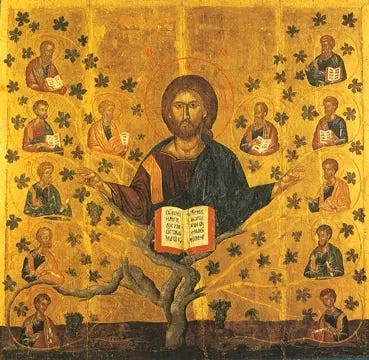
Some extra things to reflect on:
“We do what is right and we face the consequences.” (Scot McKnight)
Applying this phrase to our lives, how would it change the way we work at our jobs? How would it affect the way we interact with what is happening in our neighborhoods and cities? Does this change how we think, talk, and act? Does it change what we allow to be said and done in our presence? Would it embolden us, the Church, to speak up and out against injustices happening to our neighbors?
“The earth is the LORD’S and all that is in it, the world, and those who live in it”
Psalms 24:1
“The heavens are the LORD’S heavens, but the earth he has given to human beings.”
Psalms 115:16
How does reflecting on these verses provide color to “kingdom” and “will”?